
Table of contents
- Who actually approves a new FMS at a university?
- What university trustees actually want to hear about facilities software
- Why now?
- Build the case with data, even if you don't have a system yet
- Translate features into outcomes the board cares about
- Get the budget question right
- Anticipate the objections before you walk in
- Present "do nothing" as one of your options
- What to bring to the meeting
- Key takeaways
You know your team needs new facilities management software. Your CFO probably knows it too. The trustees? They’re another conversation entirely.
The vocabulary shifts. The questions sharpen. The people asking them are usually not facilities people. They’re lawyers, doctors, business owners, donors, retired executives with a fiduciary duty to the institution. They’re not asking whether the software is good. They’re asking whether approving it is the responsible thing to do with the university’s money.
Your proposal can be airtight and still lose the vote if it’s not in the language the board already speaks.
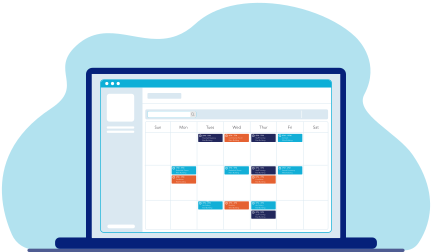
Manage your campus facilities and grounds from a single interface
Streamline day-to-day management processes into a simple and reliable system your whole team will love.
Who actually approves a new FMS at a university?
In most institutions, the full board doesn’t approve operational software. The path runs through one or two committees, with the President or Chancellor as the formal sponsor, and the CFO as the gatekeeper who decides whether your proposal ever gets the trustees’ real attention.
The committee with jurisdiction is usually Buildings and Grounds (sometimes called Physical Properties, Facilities, or Buildings and Operations). At larger institutions, it’s a standing committee that meets several times a year and reports up to the full board. Its mandate is the physical plant: capital projects, master plans, major equipment, and software and technology that supports facilities operations.
The Finance Committee often gets involved when the dollar value crosses a threshold or when the purchase is being funded outside the operating budget. At public institutions especially, a Finance Committee sign-off can be a hard requirement above a specific dollar amount written into the bylaws.
A few things change at R1s and multi-campus systems. The committee is more likely to be called Physical Properties or Facilities and Capital Planning, the dollar thresholds are higher, and there’s often an IT or Information Technology subcommittee involved because the FMS is going to integrate with the institution’s existing systems. The approval process becomes a relay across multiple committees rather than a single vote.
Map the path before you build the case
Before you write a slide, find your path.
Pull your board bylaws or board manual. At public institutions, they’re usually posted on the trustees’ website. Find the committee that has jurisdiction over facilities technology. Find the dollar threshold that triggers board action. Most institutions have one, and it’s the difference between a quiet administrative purchase and a formal board agenda item.
Then find your real presenter. It’s rarely you. The person who walks the proposal into the boardroom is almost always the President, Chancellor, Vice President of Finance, or Vice President of Operations. Your job is to arm them. That changes what you produce. You’re not building a pitch deck. You’re building source material strong enough that whoever delivers it can answer hard questions you won’t be there to answer for them.
The CFO is your real first audience
Trustees take their facilities cues from leadership, not from your slide deck. If the CFO walks into the committee meeting nodding, your path is clear. If the CFO walks in skeptical, you’re not getting a vote no matter how good your slides are.
Brief them first. Build the case with them. Don’t surprise them in the room.
What university trustees actually want to hear about facilities software
Trustees have a legal fiduciary duty to the institution. That isn’t ceremonial. It’s the lens through which they weigh every dollar that crosses their desk, and it shapes the questions they’re going to ask about an FMS. Four angles do most of the work.
Risk
Universities live with risk most boards never think about: ADA compliance, environmental compliance, life-safety codes, Title IX-adjacent facility issues, lab safety, student housing conditions. A burst pipe in a residence hall at 11 p.m. on a Friday is a duty-of-care issue. Somebody is going to ask why preventive maintenance didn’t catch the warning signs three months ago. An FMS turns that question from a panic into a paper trail.
Asset stewardship
Universities sit on billions of dollars in physical assets: buildings, central plants, underground utilities, fleet, equipment. The board’s job is to protect those assets across decades. Without an FMS, the institution can’t actually answer basic questions about its own asset base: condition, age, replacement cost, maintenance history. An FMS gives the board the answers it’s already supposed to have.
Enrollment and yield
Facilities used to be invisible to enrollment. Not anymore. Prospective students walk past shuttered buildings on campus tours. Admitted-student events get held in spaces with HVAC systems on borrowed time. Residence hall reviews on social media reach more applicants than admissions emails do. Trustees who follow enrollment data (which is to say all of them) recognize that facilities have become a competitive variable, not a back-of-house concern.
Mission
Every institution has a stated mission and a strategic plan. Find them, read them, and tie the FMS investment directly to whatever language they use. A research university talks about research competitiveness and infrastructure capacity. A liberal arts college talks about residential community and student experience. A community college talks about access and workforce alignment.
Tie the FMS to whichever of these your board actually weights. Don’t make trustees do the translation themselves. They have a finance committee meeting tomorrow, a capital campaign call after that, and a wedding on Saturday. The clearer you make the connection, the less work they have to do to vote yes.
Why now?
Higher ed facilities are in a position the boardroom is starting to take seriously.
Gordian’s 2026 State of Facilities in Higher Education report, drawn from 43,000 campus buildings and 1.1 billion gross square feet across North America, put the deferred capital renewal backlog at $156 per gross square foot, an 8% jump in a single year and roughly double what it was less than two decades ago. Institutions are currently investing 73.5% of what’s needed to keep the backlog from growing, which means it’s growing. Operating budgets are running 18.5% below target. Sixteen colleges announced closures last year.
The math underneath those numbers is the part that matters to a board. Deferred maintenance compounds at 6 to 8% per year. Institutional budgets grow at 2 to 3%. Every year a campus runs on reactive maintenance and spreadsheets is a year that gap widens, and trustees are the ones legally responsible for the institution’s long-term financial health. Moody’s Ratings, in its 2024 report Pent-up Capital Needs: The Hidden Liability with a Hefty Price Tag, called the higher ed deferred maintenance backlog “a significant credit risk for the sector” and estimated rated institutions need $750 billion to $950 billion in capital spending over the next decade. Your trustees have seen that. They’ve also seen the local version of the number on their own institution’s facility condition assessment.
What they haven’t seen is software that turns the backlog from a frozen number on a slide into a working triage tool. That’s the case. An FMS is the instrument that makes deferred maintenance visible, prioritized, and defensible. It’s the difference between “we have a $200 million problem” and “here’s what we’re paying down each quarter, and here’s what it bought us.”
Build the case with data, even if you don’t have a system yet
The chicken-and-egg of this whole exercise: you’re asking for software that would give you data, but you don’t have the data yet because you don’t have the software.
There are two ways through.
Track what you have manually for 60 to 90 days
Pick two or three numbers that tell the story:
- Work order intake volume
- Completion rate
- Average response time
- Labor hours per week spent on reactive vs. planned work
Log them in a spreadsheet. It’s tedious and it eats your evenings, but it works.
A specific move that lands well with trustees: track how long the manual tracking itself takes. When you walk in and say “compiling this for the meeting took six hours of my time this month, every month. This is what we’re paying for without the software,” that line tends to stick. The board is hearing a number that turns into payroll. Suddenly the spreadsheet isn’t a workaround. It’s evidence.
Borrow credibility from peer institutions
Higher ed runs on peer benchmarking. Trustees know it. Almost every strategic decision a board makes is benchmarked against what comparable institutions are doing.
Use that. Reach out to the facilities director at a peer institution (same size, same Carnegie classification, same conference if possible) that’s already implemented an FMS. Ask them what their operation looked like before and after. Ask them what they learned the hard way. Ask if they’d be willing to take a 15-minute call with your VP of Finance, or write a paragraph for your board packet.
A reference from a counterpart at a peer institution will do more work for you than a vendor demo. Trustees believe other trustees and other administrators. Vendors they discount on instinct.
Manage your campus facilities and grounds from a single interface
Streamline day-to-day management processes into a simple and reliable system your whole team will love.
Translate features into outcomes the board cares about
A trustee does not care that the FMS has mobile work orders. A trustee cares about what mobile work orders produce. The board reads in outcomes. Translate before you walk in.
A few that travel well:
- Preventive maintenance scheduling becomes asset lifespan extension and deferral of capital replacement. Every roof, chiller, and AHU that runs an extra five years is capital the institution didn’t have to raise.
- Work order data becomes defensible capital planning requests. Instead of asking for $4M because someone has a feeling, you ask for $4M because the data shows what’s failing and when.
- Asset registry becomes audit readiness, insurance posture, and ADA/Title IX defensibility. A documented record of campus assets and their condition is a different legal position than a binder in a maintenance shop.
- Reporting and dashboards become board-ready visibility. Trustees would rather see a one-page status report than a verbal update, and they’ll trust it more when it comes out of a system rather than a spreadsheet a director assembled in a hurry.
You don’t need to cover every feature. You need to cover the four or five that map directly to things the board is already worried about.
Get the budget question right
Higher ed budgeting has its own mechanics. The difference between a yes and a no often comes down to where the FMS lives in the budget structure.
Know your full departmental picture
Before you walk into the room, know what’s already allocated, what’s earmarked, what’s flexible, and what’s fenced off. Even line items you don’t directly control affect how the board hears your ask. A facilities director who walks in with command of the department’s full budget reads as credible. A facilities director who only knows their own slice reads as junior.
Capital or operating?
This is where universities differ from most organizations. SaaS subscriptions usually live in operating budgets. Multi-year licensed software with significant implementation costs may be capitalizable. Some institutions fund an FMS out of capital because it supports capital stewardship. Others run it through IT operating because it’s software. Neither is wrong. The CFO will have a strong opinion about which fits your institution’s accounting practices, and that opinion matters more to the board than yours does. Find out their preference before the meeting.
Trade-offs and reallocation
Most successful FMS approvals at universities aren’t pure new spend. They’re partly reallocation. Identify what the system replaces, displaces, or makes unnecessary: redundant point solutions, manual data-entry hours, deferred capital projects that the system itself helps prioritize. A budget conversation that starts with “here’s how we partially fund this from existing budget” lands differently than one that starts with “here’s a new ask.”
Build a defensible ROI
Either build your own ROI calculation using peer institution data, or use a vendor-provided calculator with conservative inputs. Convert the gains into dollars: hours saved, reactive cost avoided, PM coverage gained, energy savings from better-tuned equipment, deferred maintenance you actually pay down. A defensible ROI isn’t optimistic. It’s transparent about its assumptions and lets the trustees stress-test them.
Anticipate the objections before you walk in
Walking in unprepared for objections is the fastest way to lose the room. Walking in having already addressed them, ideally in the first half of the deck, signals you’ve done the work. That signal alone changes the temperature.
Seven questions come up at university board tables more than any others.
“Can’t we just hire more techs?”
This one comes up more than people expect, especially from board members who haven’t lived in operations. The honest answer: hiring more technicians without the software to deploy them is how backlogs grow, not how they shrink. Two more techs without a work order system means two more techs reacting to whatever’s loudest. An FMS makes the team you already have more productive, gives you a real number for how much labor you actually need, and makes future headcount asks defensible with data instead of conviction. The two are complements, not substitutes.
“This is operational. It doesn’t belong at the board level.”
Sometimes that’s true and sometimes it’s a way out of a decision. Know your bylaws. If the purchase is below the threshold that triggers board review, the answer might be that this is the wrong room and you should be presenting to the cabinet or the President. If it’s above the threshold, the bylaws say it does belong here, and you can say so politely.
“What’s the total cost over five years?”
Have the full number ready. Subscription cost, implementation, integrations with your existing systems, training, and internal staff time. Don’t show only year one. Boards have been burned by year-one pricing too many times to trust it. A five-year total with assumptions stated openly is far more credible than a low number followed by a footnote.
“Will the team actually use it?”
This is the right question. Adoption is the single most common reason these investments fail. The answer is not “yes, it’s intuitive.” The answer is a plan: how the vendor handles implementation, how training will be structured, who the internal champion is, what the 30/60/90-day adoption milestones look like, and how you’ll report adoption rates back to the board. Trustees feel safer when they hear a plan than when they hear a promise.
“How does this fit our procurement rules?”
Public universities have state-level procurement requirements. Private universities have their own RFP and competitive-bid policies. Either way, get ahead of this. Talk to your procurement office before the meeting. Confirm whether cooperative purchasing programs apply. Walk in with the procurement path already mapped, including which dollar threshold triggers which level of review.
“How does this talk to our existing systems?”
ERP integration is the hidden tripwire of FMS proposals at universities. If the institution runs an ERP, the board will want to know how the new software exchanges data with it. Don’t wing this answer. Get specifics from the vendor before the meeting and bring them in writing.
“Why this vendor?”
Even if you’re presenting one recommendation, the board wants to know you considered alternatives. A one-page evaluation summary (who you looked at, what criteria you used, why this one won) is enough. The point is not to relitigate the decision. The point is to show the work.
Present “do nothing” as one of your options
Boards make decisions by weighing trade-offs. If you give them one option, they weigh it against the abstract idea of not approving it. If you give them two real options—your recommendation and the status quo—they weigh it against something concrete. That changes the conversation.
“Do nothing” should be a real entry in your business case, with its own line items. For a university, it usually looks something like this:
- Continued reactive maintenance, which costs roughly 1.4 times what the same work costs when planned.
- Continued growth in the deferred maintenance backlog at the 6 to 8% compounding rate the sector is tracking.
- Continued time loss to manual data compilation across the facilities team.
- Continued opacity for capital planning: the board keeps approving facilities asks without the data to know whether the asks are right-sized.
- Continued exposure on audits, insurance, accreditation, and ADA/Title IX where a documented asset record would be the institution’s defense.
Spell those out. Attach numbers wherever you can. The point is not to scare trustees, but to make the cost of inaction as visible as the cost of approval. When both numbers are on the page, the comparison does most of the work.
What to bring to the meeting
Most board decisions happen before the meeting. The board pack typically goes out a week ahead, trustees read it on a plane or at a kitchen table, and they walk in with a position already half-formed. Your goal is to make the pack do the work.
What to include:
- A one- to two-page executive summary. The recommendation, the cost, the risk of inaction, the timeline. If a trustee only reads this page, they should still be able to vote.
- A five-year total cost of ownership table. All-in, with assumptions written underneath.
- A risk-of-inaction analysis. The “do nothing” section, made concrete with your campus data.
- A peer comparison or written reference from a facilities director at a comparable institution.
- An implementation and adoption plan. Who’s responsible, what the milestones are, when the board will get a progress update.
- A vendor evaluation summary. A single page showing who you looked at, what criteria you weighed, and why you landed where you did.
A few notes on the meeting itself. Lead with the recommendation, don’t bury it. Trustees walk in with opinions already half-formed from the pack, so open with the ask and walk through the reasoning second. Limit your slides and protect Q&A time. Twenty minutes of presentation followed by twenty minutes of questions beats forty minutes of presentation every time. The questions are where the real decision happens.
Key takeaways
- Find your committee path and your real presenter before you start building the case. Most FMS approvals at universities run through Buildings and Grounds with sign-off from the President or Chancellor.
- Get your CFO to a yes before the meeting. Trustees take their facilities cues from leadership, and a skeptical CFO costs you the vote no matter how good the deck is.
- Frame the proposal in fiduciary terms: risk, asset stewardship, enrollment, mission. Trustees weigh every dollar through that lens.
- Anchor “why now” to the compounding deferred maintenance math. The Gordian and Moody’s numbers are the strongest current evidence.
- Bring peer data. Trustees trust counterparts at comparable institutions more than they trust vendors.
- Translate features into outcomes the board already worries about: capital deferral, audit readiness, defensibility, board-ready reporting.
- Get the budget question right before you walk in. Capital versus operating treatment, what gets reallocated, a defensible ROI with stated assumptions.
- Anticipate seven common objections in the pack: more techs, board-level fit, five-year cost, adoption, procurement, ERP integration, vendor choice.
- Present “do nothing” as a real option with a real cost. Boards decide by comparison, not by sales pitch.
- After approval, report results back to the board on a regular cadence. The trust you build delivering on this ask pays for the next one.
Ready to see an FMS built for higher ed in action? Book a demo with one of our product experts.
Written by
Darin Porter
Senior Director, Professional Services and K–12 Practice Leader at FMX